Jump-start a dead battery safely
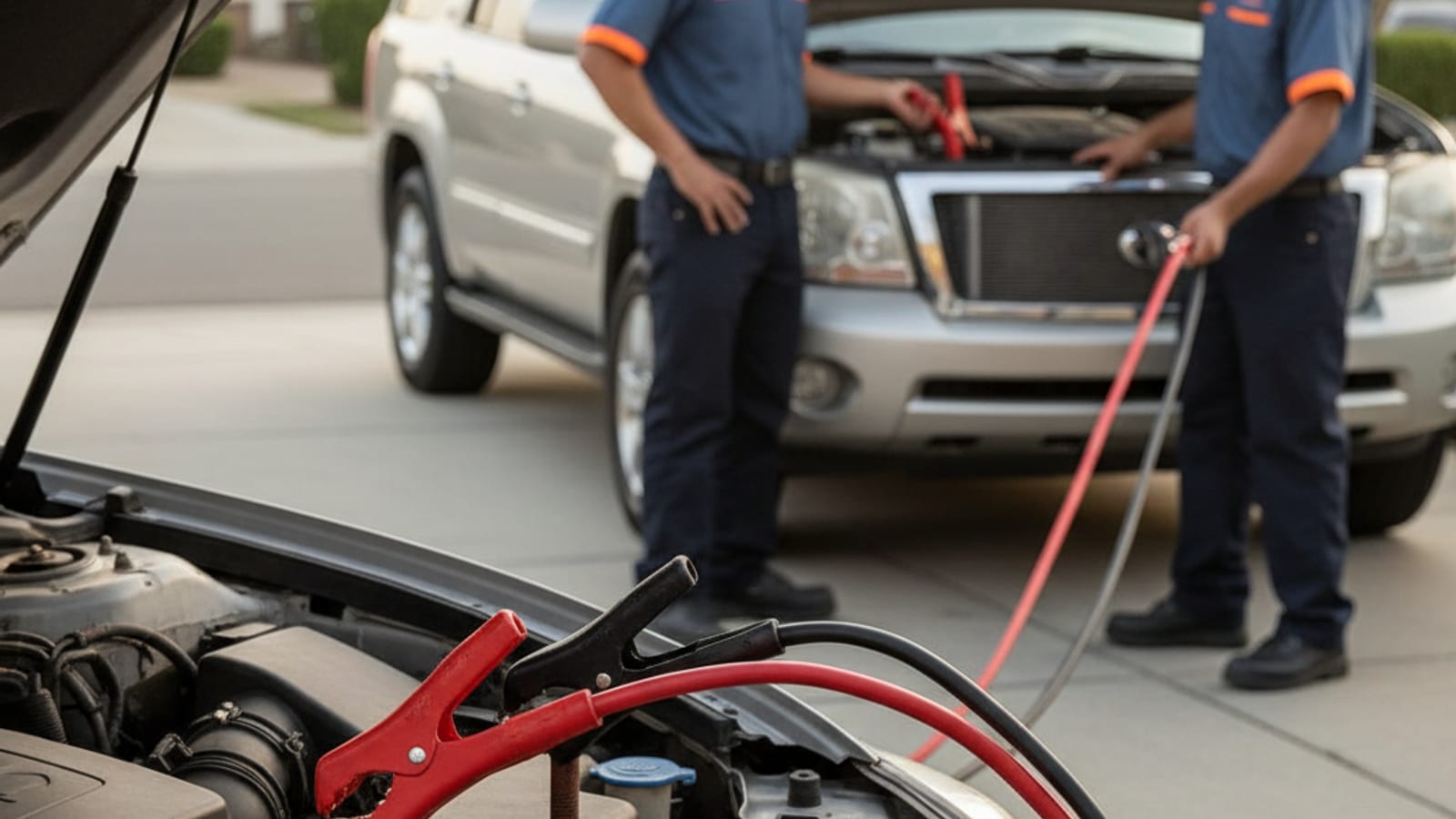
Jumper cables are simple until you hook them wrong. Do it right and you'll avoid sparks, ruined electronics, and a tow you didn't need.
What you'll learn
- The correct red-then-black clamp order (and why it matters)
- Why the last clamp goes on a bare metal point, not the dead battery
- When a jump-pack beats a cable-to-cable jump
- Signs that the alternator is bad and a jump will not fix the car
Step by step
- Pull the donor car close enough for the cables to reach. Both cars OFF.
- Clamp RED to POSITIVE (+) on the dead battery.
- Clamp RED to POSITIVE (+) on the donor battery.
- Clamp BLACK to NEGATIVE (−) on the donor battery.
- Clamp BLACK to bare metal on the dead car's engine block (not the battery).
- Start the donor. Wait 2 minutes. Start the dead car. Let run 10 minutes before driving.
Safety note
If the car cranks weakly or dies again within an hour, the alternator or battery has failed. A second jump will not help - call for a tow to a shop.
Rather have a pro handle it?
Towing and roadside help across San Diego County. The line takes calls 24/7.
More guides
Keep learning.
Safety · Guide
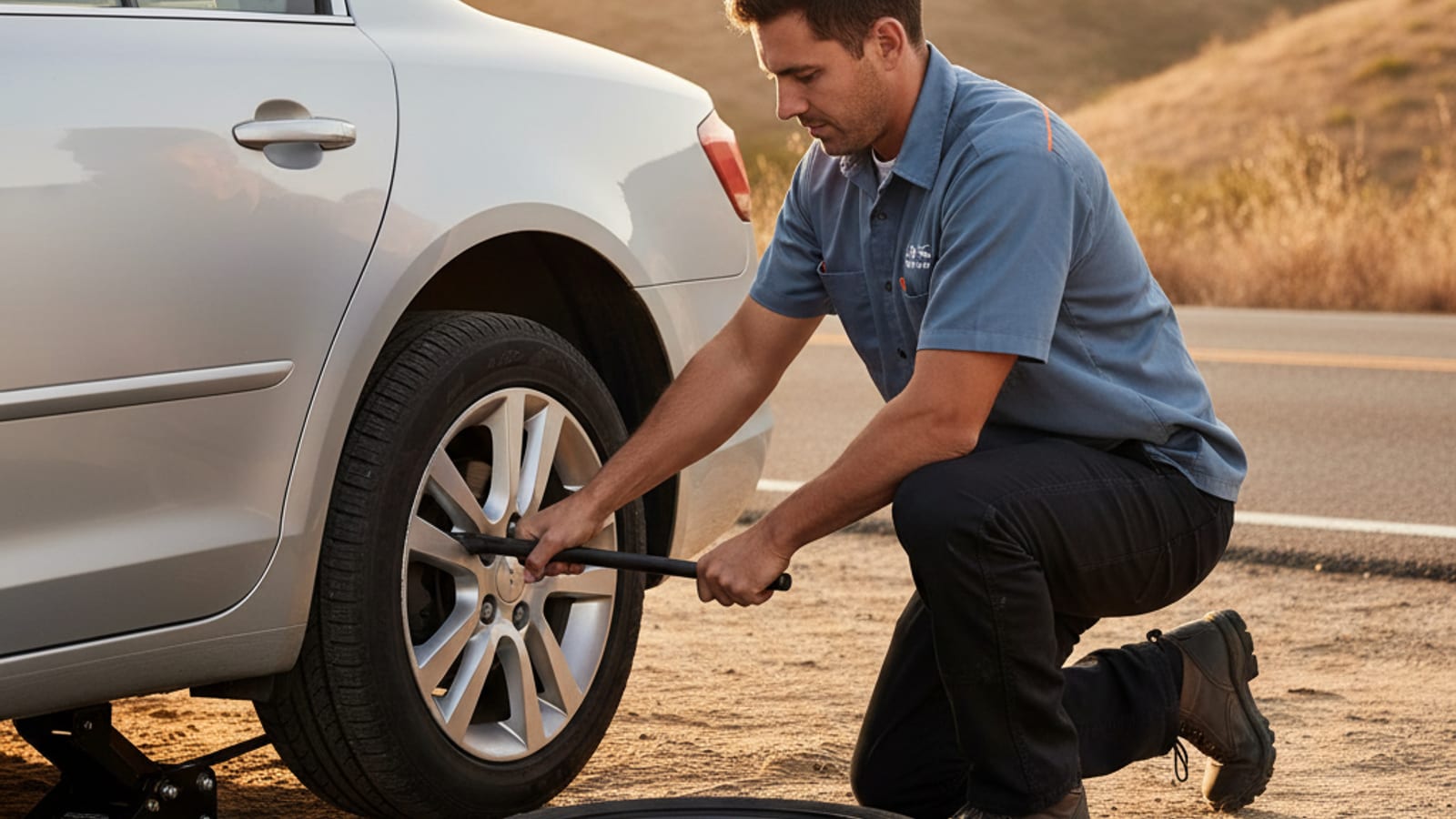
Change a flat tire on the side of the road
First decide if you have a safe, firm, level place to work. If not, stay belted unless there is fire or smoke, and call for help.
Troubleshooting · 5 min watch
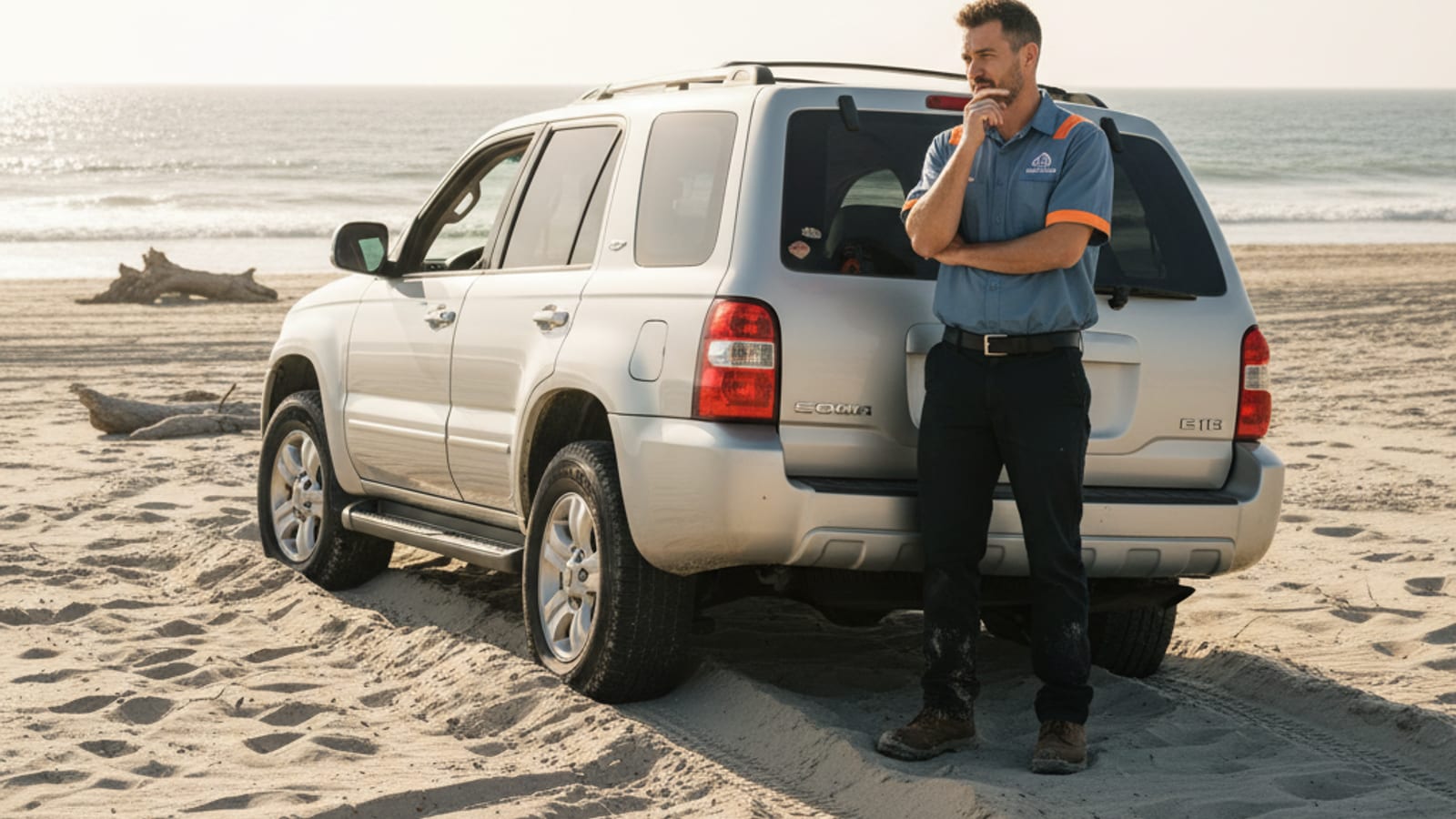
What to do when stuck in sand or mud
Ocean Beach, Fiesta Island, and the Carrizo Badlands eat vehicles weekly. The first thing to do is stop making it worse.
Prevention · 4 min watch
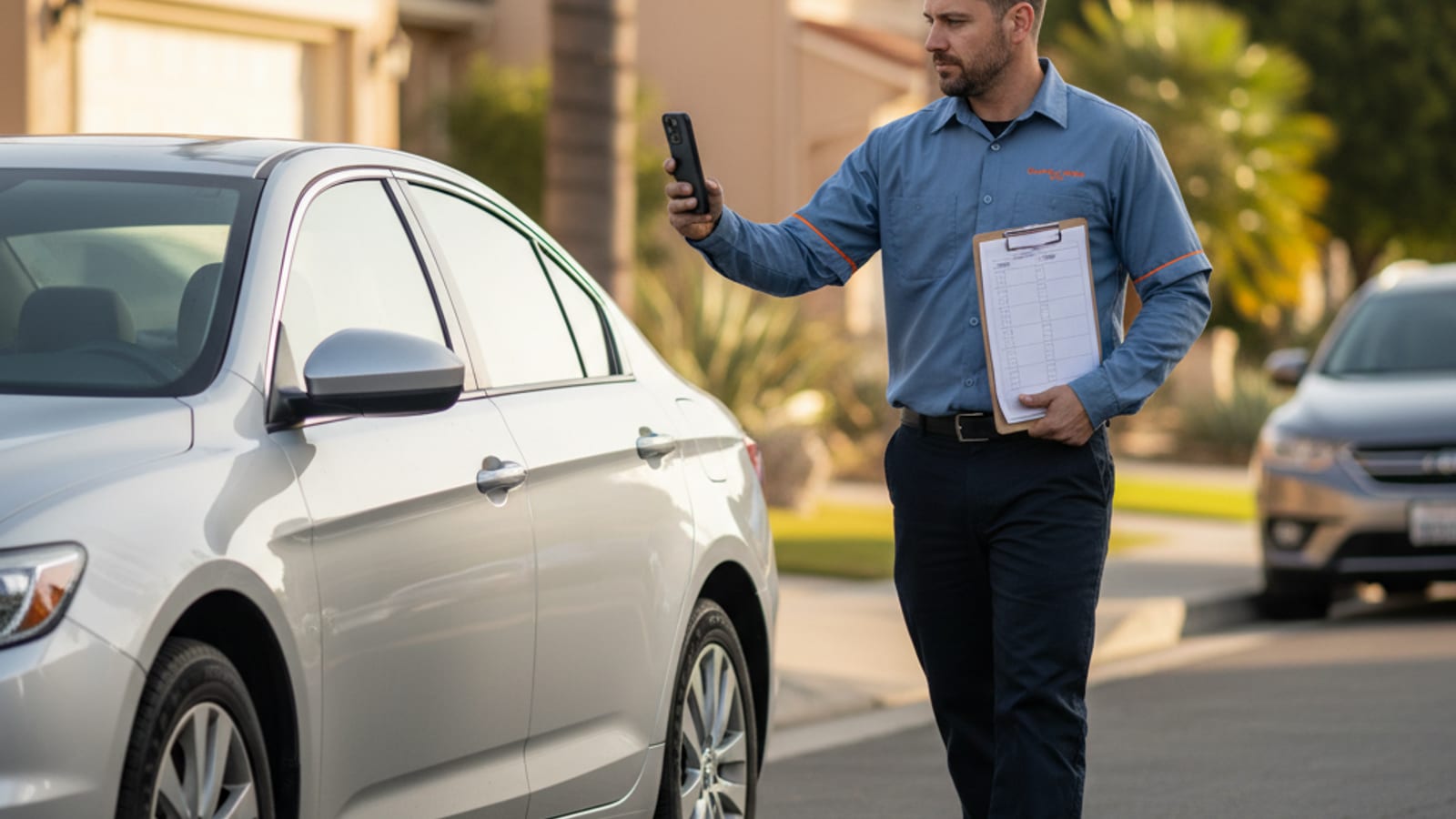
Prepare your vehicle for a tow
A few minutes of prep before the tow truck arrives saves time, avoids damage, and makes the whole call go faster.