Change a flat tire on the side of the road
First decide if you have a safe, firm, level place to work. If not, stay belted unless there is fire or smoke, and call for help.
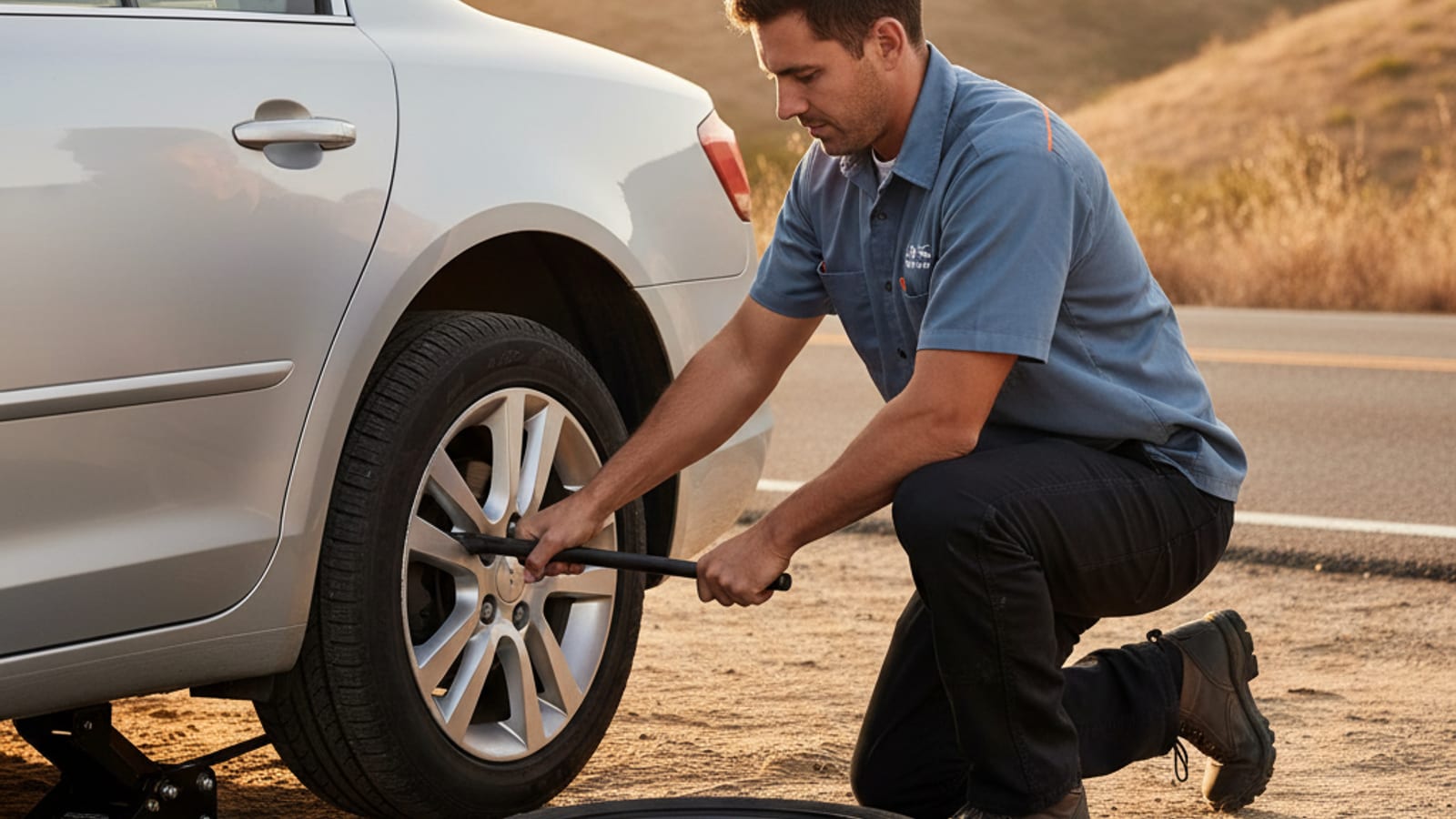
What you'll learn
- How to choose a safe working spot, or when to skip the DIY change
- What equipment you need, including the manufacturer jack point and torque spec
- The full sequence: chock, loosen, lift, star-pattern snug, torque, spare pressure
- When a missing spare, keyed lug, damaged wheel, or unsafe shoulder means you should call (858) 923-5787
Step by step
- After a blowout, keep hazards on and ease the vehicle to firm, level ground away from traffic. If there is no safe working space, stay belted unless there is fire or smoke, and call for a tow.
- Before you jack anything, confirm you have the owner manual, the correct spare or inflation kit, jack, lug wrench, keyed lug adapter if the wheel uses one, a wheel chock or wedge, a pressure gauge, and the manufacturer torque specification.
- Set the parking brake. Put an automatic in park, or a manual in first gear. Chock the wheel diagonally opposite the flat.
- Loosen each lug about a half turn in a star pattern while the tire is still on the ground.
- Place the jack only at the manufacturer jack point in the manual. Lift until the tire just clears the ground.
- Remove the lugs, mount the spare, and hand-snug the lugs in a star pattern while the wheel is still raised.
- Lower the vehicle enough that the tire cannot spin. Tighten to the torque the owner manual specifies, still in a star pattern. Check spare pressure against the tire or vehicle label.
- If the spare is a compact temporary tire, follow the speed and distance limits on that tire and in the owner manual. Recheck lug tightness after a short drive if the manufacturer says to.
On an active freeway shoulder, a sloped curb, a damaged wheel, or with no usable spare, skip the change. Call (858) 923-5787 so an independent operator can quote a move to a safe lot or shop.
Rather have a pro handle it?
Towing and roadside help across San Diego County. The line takes calls 24/7.
Keep learning.
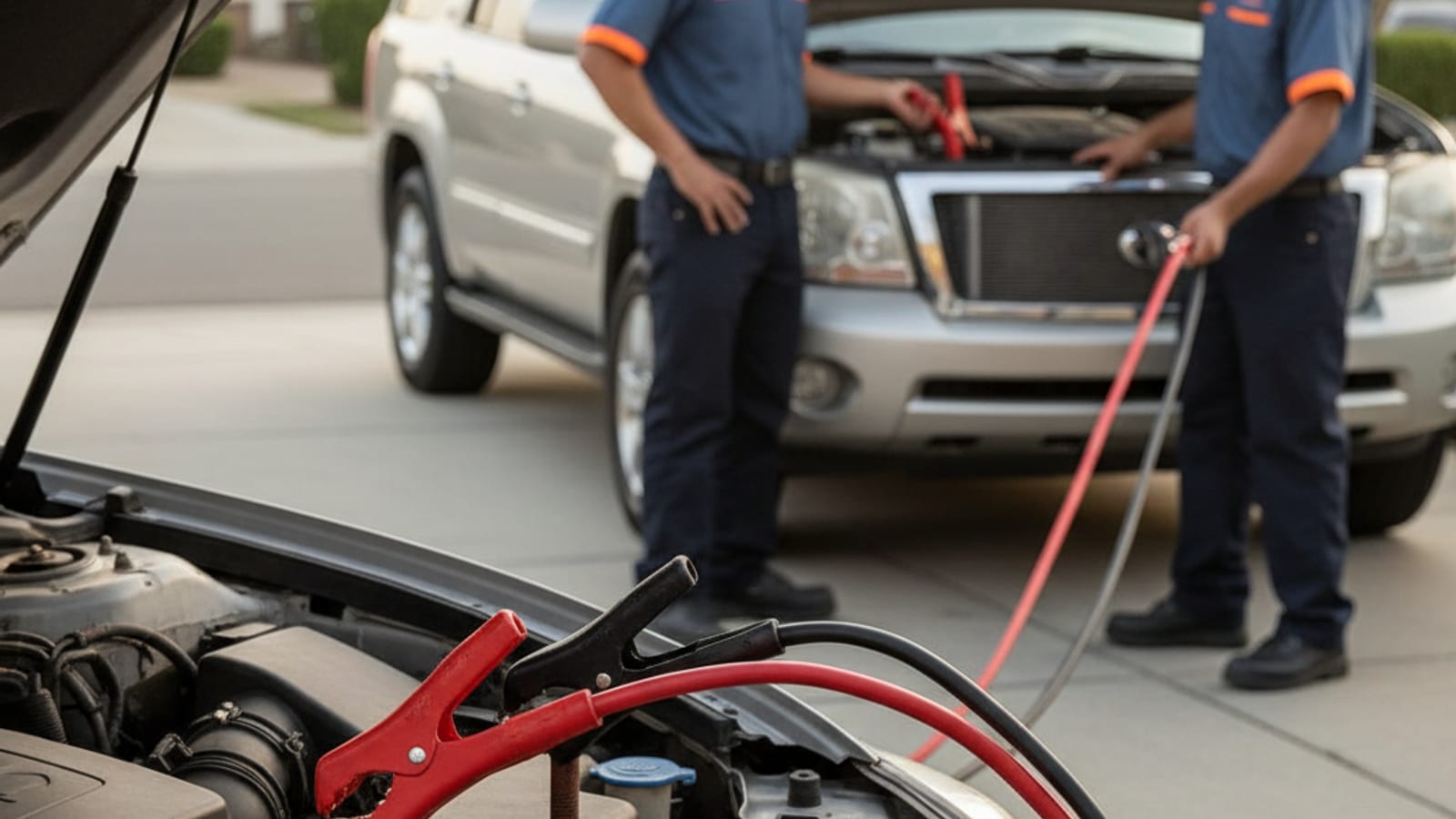
Jump-start a dead battery safely
Jumper cables are simple until you hook them wrong. Do it right and you'll avoid sparks, ruined electronics, and a tow you didn't need.
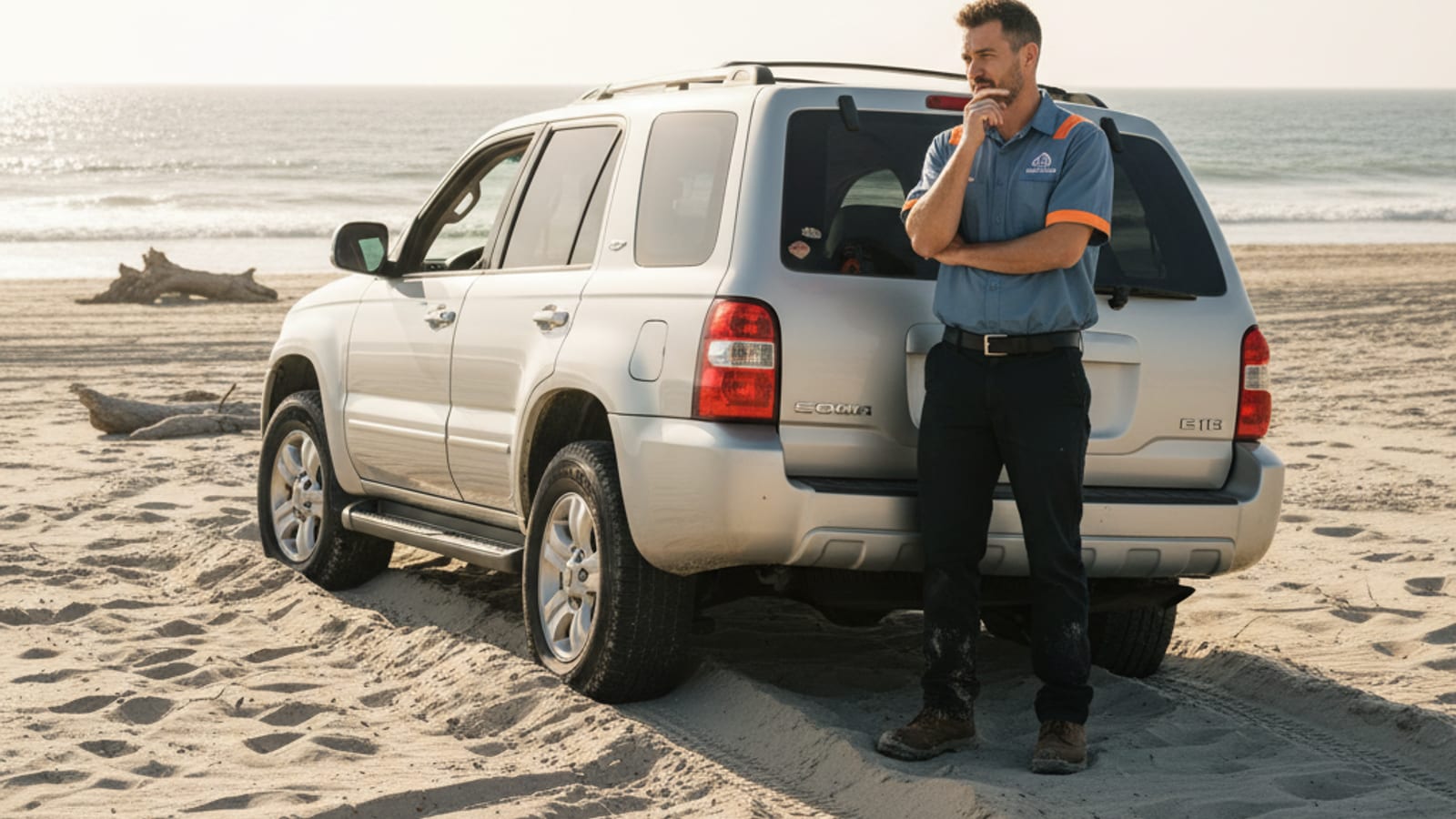
What to do when stuck in sand or mud
Ocean Beach, Fiesta Island, and the Carrizo Badlands eat vehicles weekly. The first thing to do is stop making it worse.
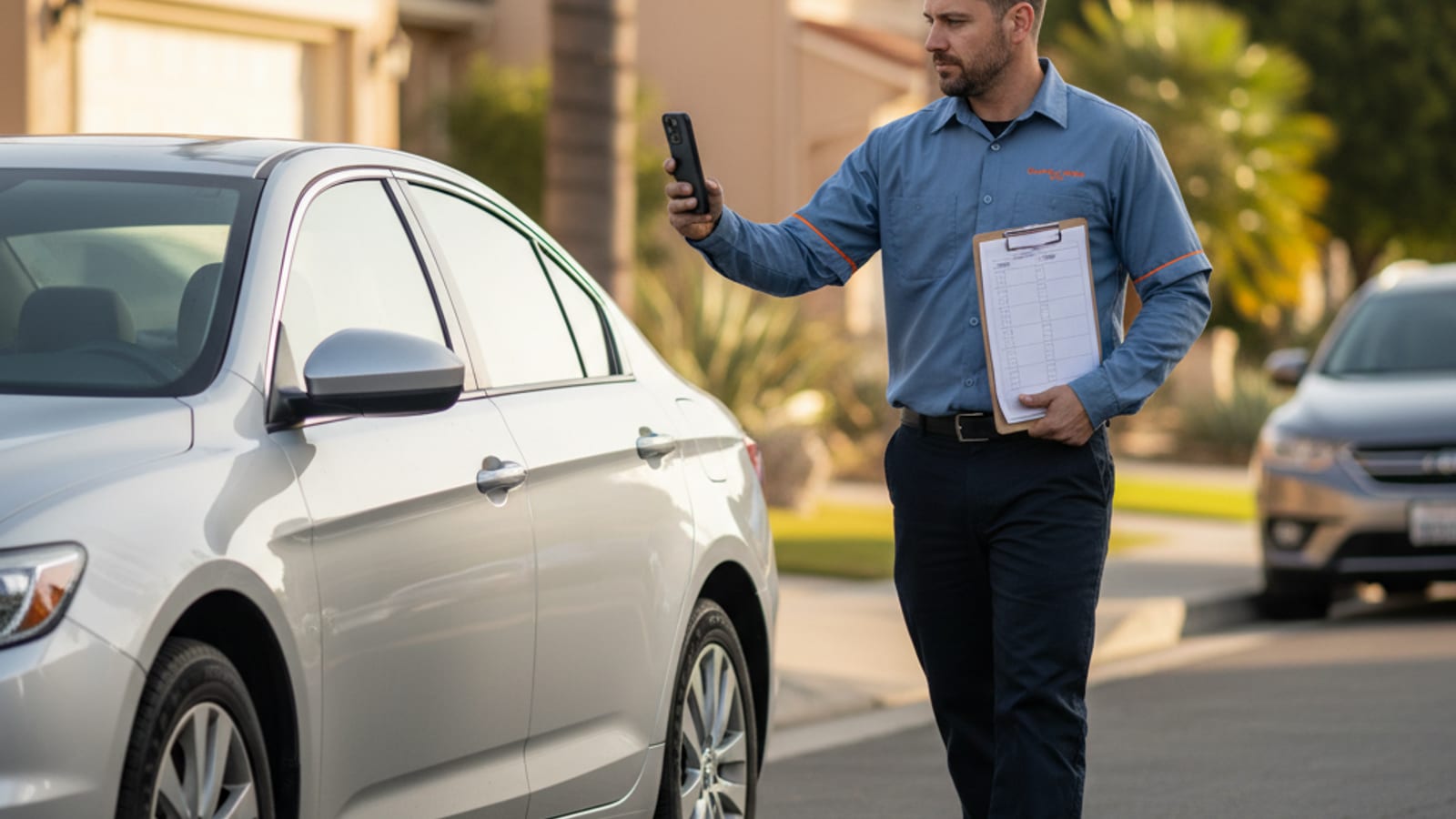
Prepare your vehicle for a tow
A few minutes of prep before the tow truck arrives saves time, avoids damage, and makes the whole call go faster.