If your car was towed from private property in California and something feels wrong, it may have been an illegal tow. Under CVC 22658, property owners and tow companies must follow specific rules. When they don’t, you’re entitled to get your money back.
This guide covers the vehicle owner’s side: how to recognize an illegal private property tow, what your rights are under California law, and how to dispute and recover costs. If you’re a property manager looking for compliance guidance, see our guide to legally towing a car from private property instead. (If a lender took your car over missed payments instead of a property owner, that’s repossession, not a CVC 22658 tow.)
What makes a private property tow illegal in California
California Vehicle Code 22658 is the statute governing private property towing statewide. It spells out exactly what a property owner and tow company must do before and after a tow. Violate any of these requirements and the tow is legally invalid.
Here are the most common violations that make a private property tow illegal:
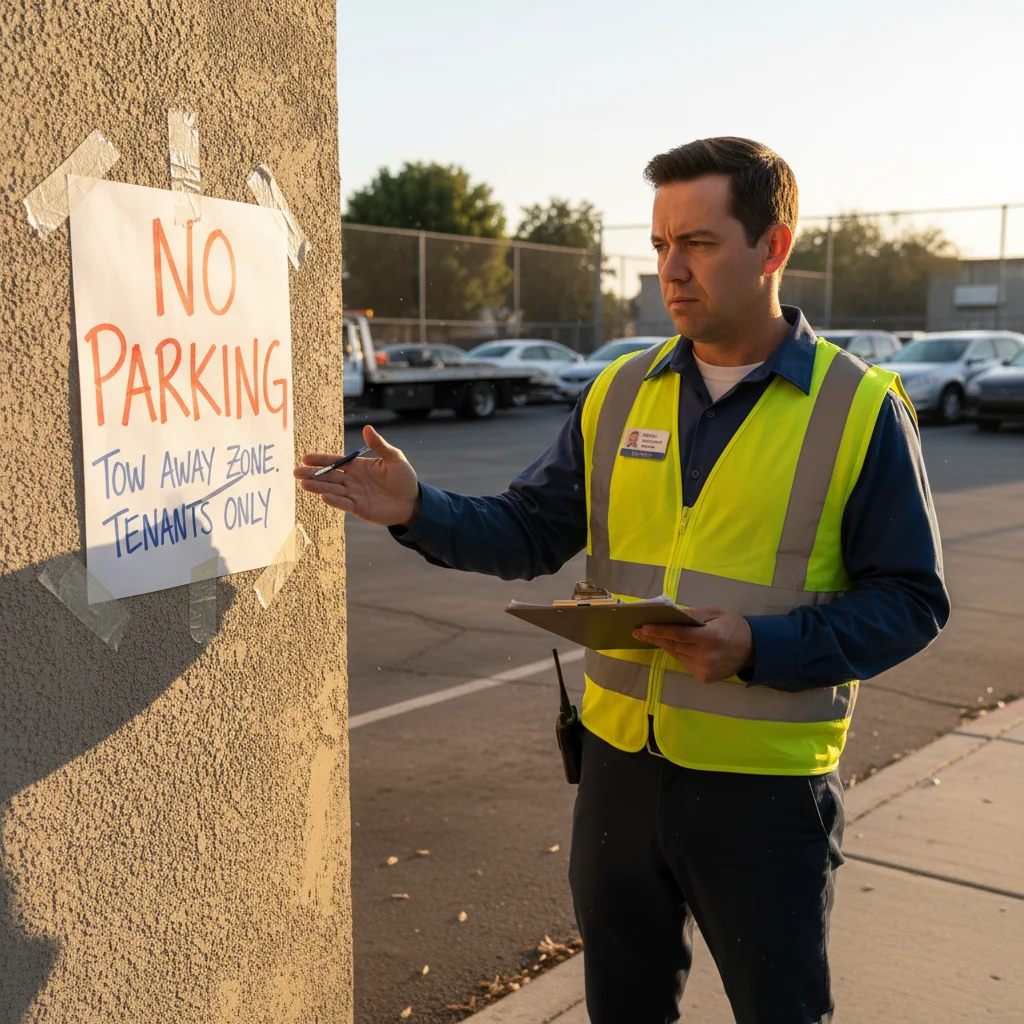
No compliant signage at the entrance
The most common reason tows get reversed. California law requires signs at every vehicle entrance to the property. The sign must be at least 17 x 22 inches, must include the towing company’s name and a 24/7 phone number, and must state that unauthorized vehicles will be towed at the owner’s expense.
If the lot where you parked had no sign, a sign only at one entrance when there are multiple, a sign that was illegible or faded, or a sign with the wrong tow company listed, the tow is almost certainly invalid. Our post on private property towing sign requirements goes through every specification the law requires.
A note on the fire lane “exception.” Blocking a fire lane, a hydrant, or an entrance doesn’t make signage irrelevant. The property still needs one of the four grounds in CVC 22658(a). What those circumstances change is who may decide: under CVC 22658(l)(1)(E)(i), those are the only cases where a tow company can act on standing authorization at its own discretion, and under CVC 22953 they permit immediate removal on free public lots where the one-hour rule would otherwise apply.
The vehicle was towed before a waiting period that actually applied
Be careful here, because this is the most misreported rule in California towing.
CVC 22658 contains no general waiting period. If a property tows on compliant signage, there’s no statutory grace period, and a fast tow is not by itself a violation.
The one-hour rule is a different statute, CVC 22953, and it only covers private property “held open to the public” for parking “at no fee.” Retail lots and shopping centers. If your car was towed from a store or mall lot within an hour of parking, and it wasn’t within 15 feet of a hydrant, in a fire lane, blocking an entrance or exit, or in a disabled space, that’s a real issue worth raising.
CVC 22953 expressly exempts residential property parking. So if you were towed from an apartment, condo, or HOA lot, the one-hour rule is not the argument to make. Look instead at signage, at whether written authorization existed, and at whether someone from the property was present and verified the violation.
The parking spot or area wasn’t clearly marked
You can’t be towed for violating a rule you had no reasonable way to know about. If the reserved parking lines were faded and unreadable, if a “permit required” sign was obscured or missing from that specific zone, or if the rules for that area were only documented in an HOA newsletter and not physically posted, you have a legitimate dispute.
The law requires that parking restrictions be obvious to any reasonable driver. If the spot’s designation was ambiguous, that ambiguity works in your favor.
Law enforcement wasn’t notified within one hour
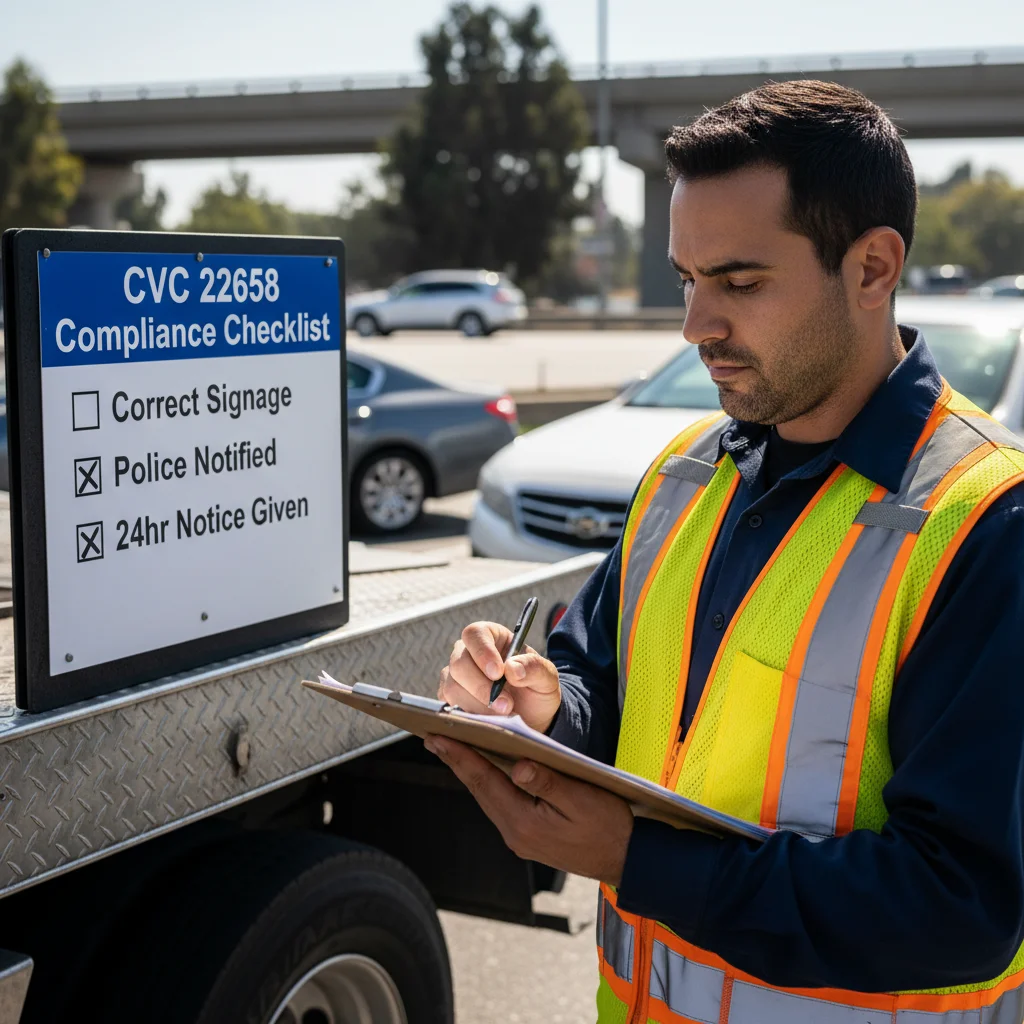
CVC 22658(f) requires the local traffic law enforcement agency to be notified within one hour of the tow being authorized, by telephone or the fastest available means. SDPD for tows inside San Diego, the Sheriff’s Department for unincorporated areas, and the relevant city department for other incorporated cities.
This notification is what prevents your car from being reported stolen when it’s actually in a tow yard. If no notification was filed, the tow is a CVC 22658 violation. You can verify this by calling the police non-emergency line and asking if the tow was logged.
The fees or the release terms were improper
CVC 22658 sets no dollar cap on release or storage fees, so be skeptical of any guide quoting a flat “legal maximum.” What subdivision (i) does is treat a charge as excessive when it exceeds what the law enforcement agency with primary jurisdiction over that location would have been charged for the same tow or storage. That’s the comparison to make if you think you were gouged, and it means asking what the local agency’s approved rate is.
Several rules are firm, though, and each is worth checking:
- Cash-only isn’t allowed. The yard must accept a valid bank credit card or cash.
- Business hours. Vehicles must be available for release Monday through Friday, 8 a.m. to 5 p.m., except state holidays.
- One day of storage is the maximum charge if the vehicle is released within 24 hours.
- After-hours gate fee is capped at one-half of the hourly tow rate charged for the original tow.
If a violation is established, CVC 22658 provides for civil liability to the vehicle owner of four times the amount of the charges involved, and a violation can carry a fine of up to $2,500.
The violation wasn’t a valid reason for towing
Property owners can authorize tows only for actual parking violations under the statute. They cannot tow for expired registration (that’s a DMV and law enforcement matter), personal disputes with the driver, retaliatory reasons, or violations of HOA rules that aren’t physical parking restrictions backed by compliant signage.
If the reason you were towed doesn’t correspond to a physical violation at the location where you parked, that’s worth disputing.
What to do if your car was illegally towed
1. Find your car first
Call the San Diego Police non-emergency line, the CHP for freeways, or the number on the tow-away sign at the lot. Give them your plate, make, and model. Once you know which yard has it, go get it out. Storage fees keep adding up. Our step-by-step guide to getting your car out of impound in San Diego covers exactly what to bring and how to handle fees.
2. Document everything before you leave the yard
Before driving away, photograph the tow receipt showing the fees charged and the time of the tow. Note whether they gave you a business-hours release without issue and whether they accepted card payment. If anything about the release process seemed off, write it down.
3. Photograph the original parking spot
Go back to where you were parked and document the signs, or the lack of them. Photograph every entrance to the lot, the zone where you parked, any parking markings, and any signage that was present. Date-stamp your photos. This is your evidence.
4. File a claim or complaint
Small claims court. If the tow was illegal and you paid the fees under protest, you can sue in California small claims court for the tow and storage costs, plus up to $250 in additional damages under some circumstances. CVC 22658(h) makes the property owner jointly and severally liable with the tow company when the tow was unauthorized.
Report to the CPUC or CHP. Tow companies operating in California are regulated by the California Public Utilities Commission and the CHP. If a tow company violated the statute, particularly around fees, cash-only demands, or after-hours release refusals, you can file a formal complaint.
Contact the property owner. Sometimes the property manager authorized a tow in error. A clear conversation with documentation can resolve it faster than a legal dispute.
What a valid private property tow looks like, for comparison
Sometimes a tow is frustrating but legal. If there was a compliant sign at the entrance you drove through, the vehicle was in a legitimate violation (reserved spot, fire lane, ADA zone), and the tow company charged within the legal fee range, the tow was probably valid even if it felt unfair.
Understanding what makes a tow legal helps you assess your own situation clearly. The full process property owners and tow companies are required to follow is detailed in our CVC 22658 explainer.
One thing Quick Tow SD can help with
We can’t dispute a tow that another company ran. But if your car has already been released from impound and needs to get to your home or a repair shop, we can pick it up anywhere in San Diego County. Call (858) 923-5787 and we’ll get it where it needs to go.
Frequently asked questions
Can I get my money back if my car was illegally towed from private property in California?
Yes. If the tow violated CVC 22658, you can recover the tow and storage fees. CVC 22658(h) makes the property owner jointly liable with the tow company when the tow was unauthorized. You can pursue this through California small claims court or by filing a complaint with the relevant regulatory body.
What’s the most common reason a private property tow is illegal in California?
Missing or non-compliant signage. California requires signs at every vehicle entrance meeting specific size, content, and placement requirements. A property with no sign at the entrance, or a sign that doesn’t name the actual tow company used, almost always loses a wrongful-tow dispute.
Does a tow company have to wait before hooking my car?
It depends where you parked, and the rule isn’t in CVC 22658. CVC 22953 bars towing within one hour of parking on private property held open to the public for free parking, like a retail or shopping center lot. It expressly exempts residential parking, so it doesn’t apply to apartment, condo, or HOA lots. Even where it applies, a vehicle within 15 feet of a hydrant, in a fire lane, blocking an entrance or exit, or in a disabled space can be removed immediately.
What if the tow yard demanded cash only?
That’s a violation of CVC 22658, which requires the yard to accept a valid bank credit card or cash. Cash-only isn’t compliant. If you were forced to pay cash to get your car, document it and report it to the CHP or CPUC.
How do I find out if the tow company notified the police?
Call the San Diego Police non-emergency line, the CHP, or the relevant city department and ask if a tow was logged for your vehicle at that location on that date. CVC 22658(f) requires notice within one hour of the tow being authorized, so a missing log entry is worth pursuing.
Can I dispute a tow if the sign was there but I just didn’t see it?
Probably not, if the sign was compliant and properly placed. CVC 22658 requires signs to be visible from the driver’s seat at every entrance. If you entered through a signed entrance, the legal standard is met even if you missed it. If the sign was at one entrance and you entered through a different, unsigned one, that’s worth disputing.