Auto towing rates in San Diego run $95 to $150 for the hook-up plus $4 to $7 per mile, with a typical short tow landing between $115 and $195 total. Those are the cash-pay numbers. Whether AAA, your auto insurance’s roadside add-on, or a pay-per-tow call comes out cheaper depends on how often you break down. This guide covers the rate structure, a vehicle-class breakdown, and a clear comparison of all three payment options so you can decide which one makes sense before you’re stuck on I-15. For a full overview of every vehicle type and distance scenario, see what a tow truck costs in San Diego.
Base hookup fee plus per-mile: the standard San Diego structure
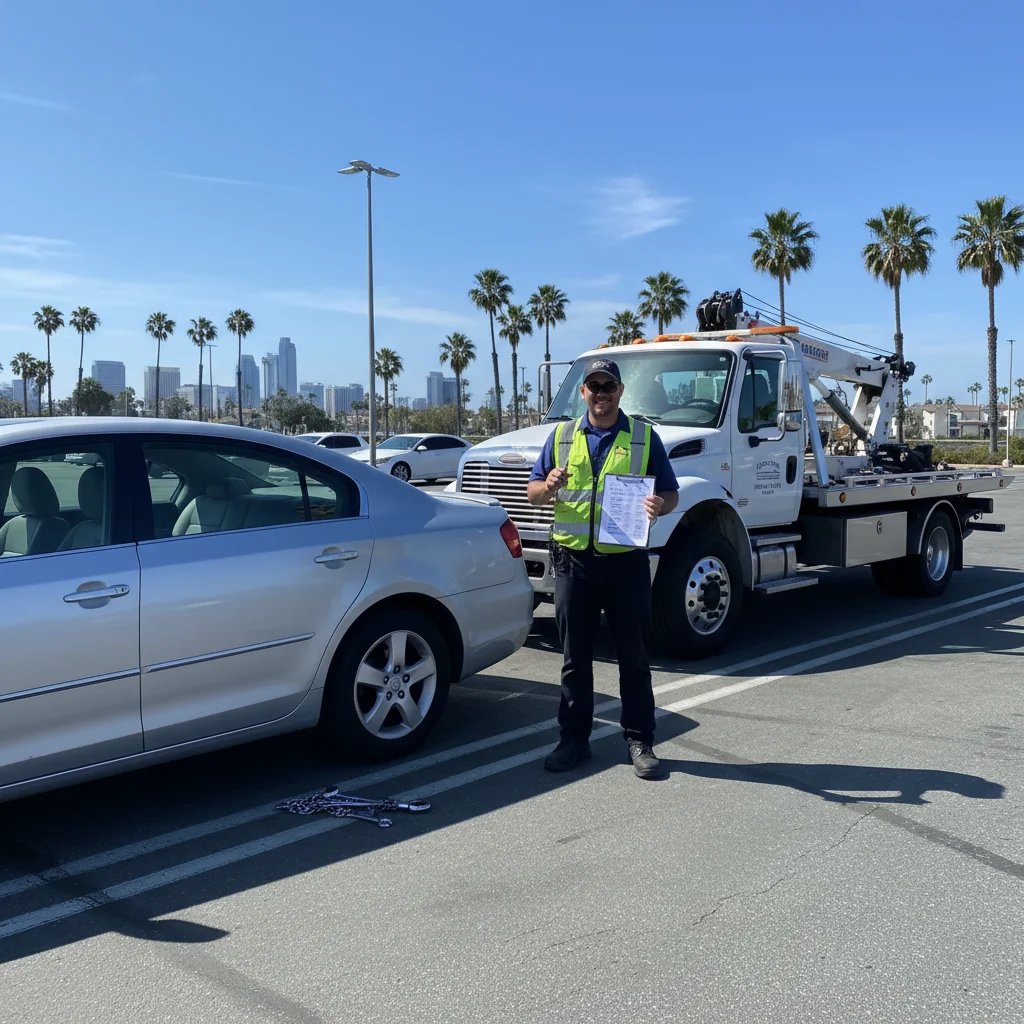
Most reputable towing companies in San Diego structure their pricing around two core components: a base hookup fee and a per-mile charge. Understanding this model is the first step to knowing what you’ll pay.
The hookup fee, also known as the base rate, is a flat charge that covers the cost of dispatching the truck and operator to your location. It includes the initial labor involved in safely securing your vehicle to the tow truck, whether it’s a flatbed or a wheel-lift. Think of it as the minimum charge for the service call. In 2026, San Diego drivers can expect this fee to range from $95 to $150 for a standard vehicle during normal business hours.
The per-mile rate is the charge for the distance your vehicle is transported. This fee typically kicks in after a certain number of miles are included in the hookup fee (often the first 5 to 10 miles). For every mile beyond that initial distance, you’ll be charged a set rate. In the San Diego area, this generally falls between $4 and $7 per mile.
Here’s a simple example:
- Your tow distance: 12 miles
- Hookup fee: $125 (includes the first 5 miles)
- Per-mile rate: $6
- Calculation: $125 (base) + (7 extra miles x $6/mile) = $125 + $42 = $167
Always ask the dispatcher to confirm both their hookup fee and their per-mile rate when you call. This two-part structure is the foundation of nearly every towing invoice.
Sedan vs SUV vs truck: how vehicle size changes the rate
Not all vehicles are created equal, and their size and weight directly impact towing rates. A heavier or larger vehicle requires heavier equipment, more fuel to transport, and more time and care to load securely. This is why towing companies have different price tiers based on vehicle class.
Light-Duty Vehicles
This is the most common category and includes standard sedans (like a Honda Civic or Toyota Camry), coupes, and small crossovers or SUVs (like a RAV4 or CR-V). These vehicles typically weigh under 10,000 pounds and can be handled by a standard tow truck. The rates discussed in the previous section, the $95-$150 hookup fee and $4-$7 per mile, generally apply to this class.
Medium-Duty Vehicles
This class includes larger vehicles like full-size SUVs (Chevy Tahoe, Ford Expedition), minivans, and standard pickup trucks (Ford F-150, Ram 1500). Towing these vehicles may require a more powerful truck or specialized equipment. Because of the increased weight and size, you can expect the hookup fee to be slightly higher, often by an additional $25 to $50. The per-mile rate may also be a dollar or two higher.
Heavy-Duty Vehicles
Towing for vehicles like large work trucks, RVs, box trucks, or buses is a completely different service. It requires a specialized heavy-duty wrecker with a highly trained operator. The equipment and expertise involved mean the costs are substantially higher. Hookup fees for heavy-duty tows often start at $250-$500 and can go much higher depending on the situation, with per-mile rates ranging from $8 to $12 or more. While this guide focuses on standard auto towing, it’s important to know that heavy-duty towing operates on a different pricing scale.
Local vs long-distance vs cross-county pricing
Where your car needs to go is just as important as what kind of car it is. Towing companies adjust their pricing models based on the total distance of the tow, ensuring the rates are fair for both short hops and longer hauls.
Local Tows (typically under 20 miles): This is the most frequent type of tow service. Whether you’re going from a breakdown on Balboa Avenue to your mechanic in Kearny Mesa, or from your home in Chula Vista to a dealership downtown, these tows fall squarely into the standard pricing model: base hookup fee plus the per-mile rate. The final bill is straightforward and easy to calculate.
Long-Distance Tows (over 50 miles): When you need to transport a vehicle a significant distance, the standard per-mile rate can add up quickly. To make these tows more affordable, many companies either offer a reduced per-mile rate for distances over a certain threshold (e.g., 75 miles) or quote a flat rate for the entire trip. A flat rate provides cost certainty for both you and the towing company, factoring in fuel, time, and the operator’s return trip. An honest company will always discuss these options with you upfront. If you want a deeper dive, our guide on how much a tow truck costs in San Diego covers these scenarios in more detail.
Cross-County Tows: Moving a car from San Diego County to Orange County, Los Angeles, or Riverside presents unique challenges. The operator has to contend with significant traffic on the I-5 or I-15, which increases time and fuel consumption. For these inter-county tows, it’s essential to get a firm, all-inclusive quote before the truck is dispatched. This prevents any surprises when the final bill arrives.
Surcharges that catch drivers off guard
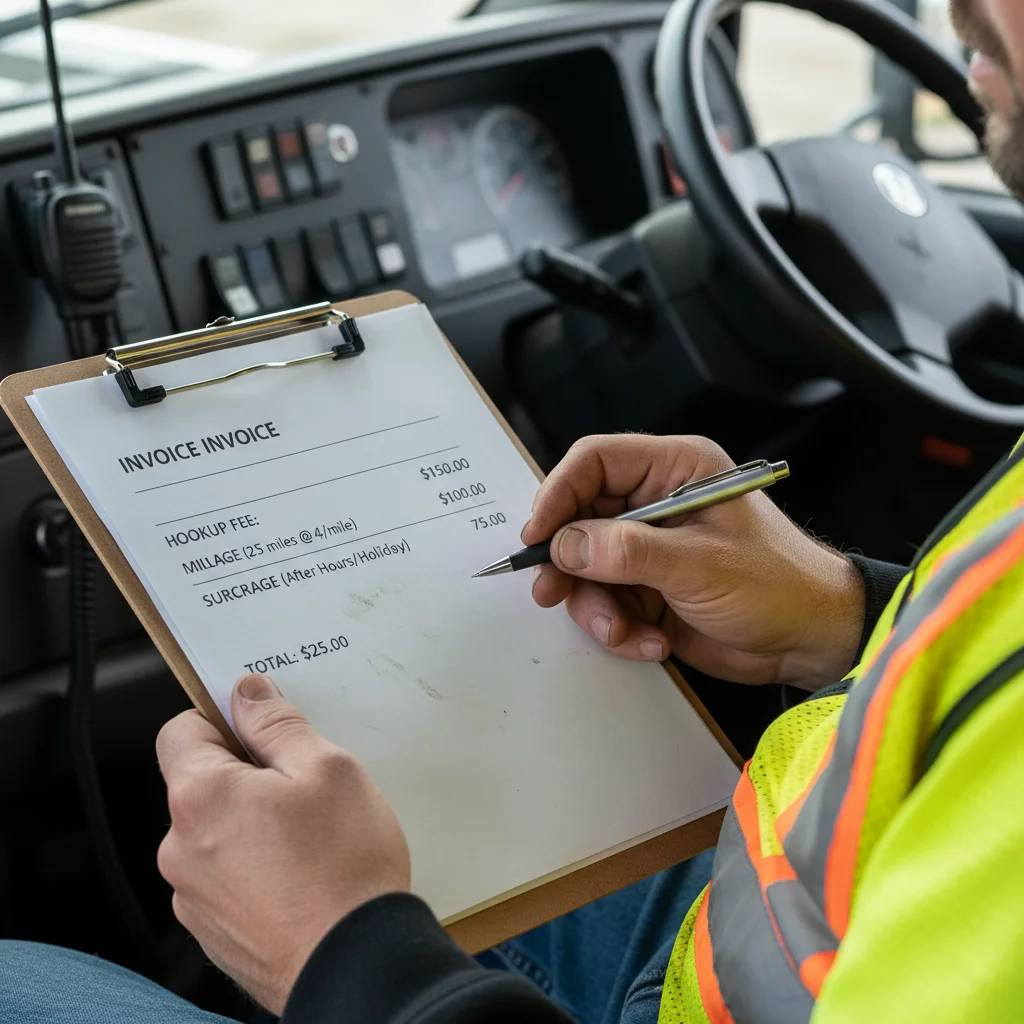
The final towing bill isn’t always just the hookup fee and mileage. Several legitimate surcharges can apply depending on the time, place, and condition of your vehicle. A transparent company will explain these potential charges when you call, but it’s good to be aware of them.
- After-Hours, Weekend, or Holiday Fees: Towing services are needed 24/7, but operating outside of standard business hours (typically 8 a.m. to 6 p.m. on weekdays) costs more. Expect an additional charge of $50 to $100 for service at night, on weekends, or on major holidays.
- Winching or Recovery: If your car is not on a flat, accessible surface, for example, it’s in a ditch, stuck in mud, or down an embankment, it needs to be “recovered” before it can be towed. This requires special equipment and skill. Winching is often billed at an hourly rate, starting from $75 to $250 per hour, depending on the complexity.
- Storage Fees: If your vehicle is towed to the company’s storage yard instead of a repair shop or your home, daily storage fees will apply. In San Diego, these fees can range from $50 to $85 per day.
- Special Equipment (Dollies/Go-Jaks): All-wheel-drive (AWD) vehicles cannot be towed with their drive wheels on the ground. The same goes for vehicles stuck in park or with heavy front-end damage. In these cases, the operator will use dollies or Go-Jaks to lift the drive wheels. This service typically adds $40 to $75 to the bill.
- Freeway or Accident Scene Fee: Recovering a vehicle from a busy freeway or an active accident scene poses a higher risk to the tow operator. Some companies may add a small surcharge of $25 to $50 to account for the hazardous conditions.
When you need immediate help, our emergency towing team is trained to handle these complex situations safely and will always explain every charge.
AAA membership vs. insurance roadside vs. pay-per-tow: which costs less?
This is the question most San Diego drivers don’t run the math on until they’ve already paid for a tow they could have had covered.
| Option | Annual cost | What it covers | Best for |
|---|---|---|---|
| AAA Basic (Southern California) | ~$52/yr first year | Up to 5 miles per tow, 4 calls/yr | Drivers who break down close to home or work |
| AAA Plus | ~$77/yr | Up to 100 miles per tow, 4 calls/yr | Most San Diego drivers; covers a cross-county run |
| AAA Premier | ~$119/yr | Up to 200 miles per tow, 4 calls/yr | Drivers who travel to LA, Vegas, or Phoenix regularly |
| Insurance roadside add-on | $15 to $30/yr | Varies; often 1 to 2 tows to nearest shop | Infrequent breakdowns, short-haul coverage |
| Pay-per-tow (no plan) | $0 upfront | Pay the full rate each call | Drivers who rarely break down (fewer than once every 2–3 years) |
The break-even math: if a single short tow in San Diego costs $130 to $175 and AAA Plus runs $77 a year, AAA Plus pays off after roughly one tow every 12 to 24 months. If you’ve gone five years without a tow, pay-per-tow is probably cheaper overall. If you drive older vehicles or long distances, a plan covers you.
Two things drivers miss about using a plan: first, calling your insurer’s roadside line often routes to a third-party dispatch network, which can add 30 to 60 minutes to your wait. Second, using a roadside call can count against your annual allotment. For a budget-angle deep dive, read our affordable towing guide for San Diego.
Cash, card, and insurance-direct billing
Paying for the tow is the last step, and you usually have several options. Knowing how each works can simplify the process, especially during a stressful situation.
Credit/Debit Card: This is the most common and preferred payment method for most established towing companies. It’s secure, fast, and provides a clear digital receipt for your records or for submitting to insurance. Every professional operator should have a mobile payment processor in their truck.
Cash: While most companies accept cash, be cautious of any operator who insists on it or offers a significant, un-receipted discount. A reputable business will always provide a formal invoice regardless of how you pay. Paying with cash is fine, but always demand a detailed receipt.
Motor Club or Roadside Assistance: If you have a service like AAA, your auto insurance’s roadside plan, or one from your credit card, the process is a bit different. Often, the motor club will dispatch and pay the tow company directly, up to the limit of your coverage (e.g., the first 10 miles). If your tow exceeds that limit, you’ll be responsible for paying the difference to the tow operator on-site.
Insurance Direct Billing: In the case of an accident where another party is at fault, the towing company can sometimes bill the at-fault driver’s insurance company directly. This isn’t always possible and requires proper documentation from the accident scene, including the police report and insurance information.
Ultimately, the goal is a transparent transaction. Our post breaking down the total tow cost in San Diego provides more examples of how these payment methods work in real-world scenarios.
How to spot an inflated quote
Unfortunately, not every towing company operates with integrity. Some prey on drivers in vulnerable situations with inflated pricing and hidden fees. Knowing the red flags can protect you from a predatory tow.
- Vague Phone Quotes: If you call for a quote and the dispatcher is evasive, saying something like “the driver will figure it out when he gets there,” hang up. A professional company can provide a clear breakdown of their hookup fee and per-mile rate over the phone based on your location, destination, and vehicle type.
- High-Pressure Tactics: An operator who creates a false sense of urgency, telling you that you have to decide right now before the “special price” disappears, is using a classic pressure tactic. Take a moment to think.
- Refusal to Provide a Written Estimate: Before they hook up your car, the driver should be able to provide you with a written or digital estimate of the total cost based on the agreed-upon rates and distance. If they refuse, it’s a major red flag.
- Unmarked or Unprofessional Truck: A legitimate towing business invests in its brand and equipment. Be wary of a generic, unmarked truck with no company name, phone number, or USDOT number visible.
- Cash-Only Demands: While accepting cash is normal, demanding it as the only form of payment can be a sign that the operator is trying to avoid creating a paper trail. This often goes hand-in-hand with overcharging.
Your best defense is to find and save the number of a trusted, local towing company before you need one. A little preparation can save you a lot of money and stress.
Frequently asked questions
What are typical auto towing rates in San Diego in 2026?
Most San Diego towing companies charge a $95 to $150 hook-up fee for standard vehicles plus $4 to $7 per mile. A 10-mile tow lands around $115 to $195 total. Heavy-duty towing starts at $285, and after-hours surcharges from most companies add $50 to $100.
Is AAA worth it for towing in San Diego?
AAA Plus ($77/yr) covers tows up to 100 miles and pays off after roughly one tow every 12 to 24 months. If you drive an older vehicle or travel frequently to LA or beyond, it’s a clear win. If you haven’t needed a tow in several years, paying per-call is usually cheaper overall.
Does car insurance cover towing in San Diego?
A roadside assistance add-on to your auto policy (typically $15 to $30 a year) usually covers one or two tows per year to the nearest shop. Towing after a covered accident may also roll into your collision or comprehensive claim. A plain breakdown without those coverages is out of pocket.
What surcharges should I watch for on a towing invoice?
The most common extras are after-hours fees ($50 to $100), winching or recovery charges ($75 to $250 per hour for off-road situations), storage fees ($50 to $85 per day), and dollies or Go-Jaks for AWD vehicles ($40 to $75). A transparent company names these on the phone before the truck rolls.
How do I know if a towing quote is fair?
Compare the hook-up fee (should be $95 to $150 for standard vehicles in San Diego) and the per-mile rate (should be $4 to $7). Ask for a flat total before the truck leaves. If the dispatcher won’t give you a number until the driver arrives, that’s a red flag.
When to call us
When you’re stuck on the side of the road, a clear, upfront quote makes all the difference. For honest pricing and professional emergency towing anywhere in San Diego County, we’re ready to help. Call us at (858) 923-5787 for a same-day estimate.