That unmistakable thump-thump-thump is a sound no San Diego driver wants to hear. A flat tire can instantly turn a routine commute into a stressful, hazardous situation. Once you’re safely on the shoulder, the big question is: can this be fixed right here, or do you need a tow? Understanding your options is the key to getting back on the road safely and quickly.
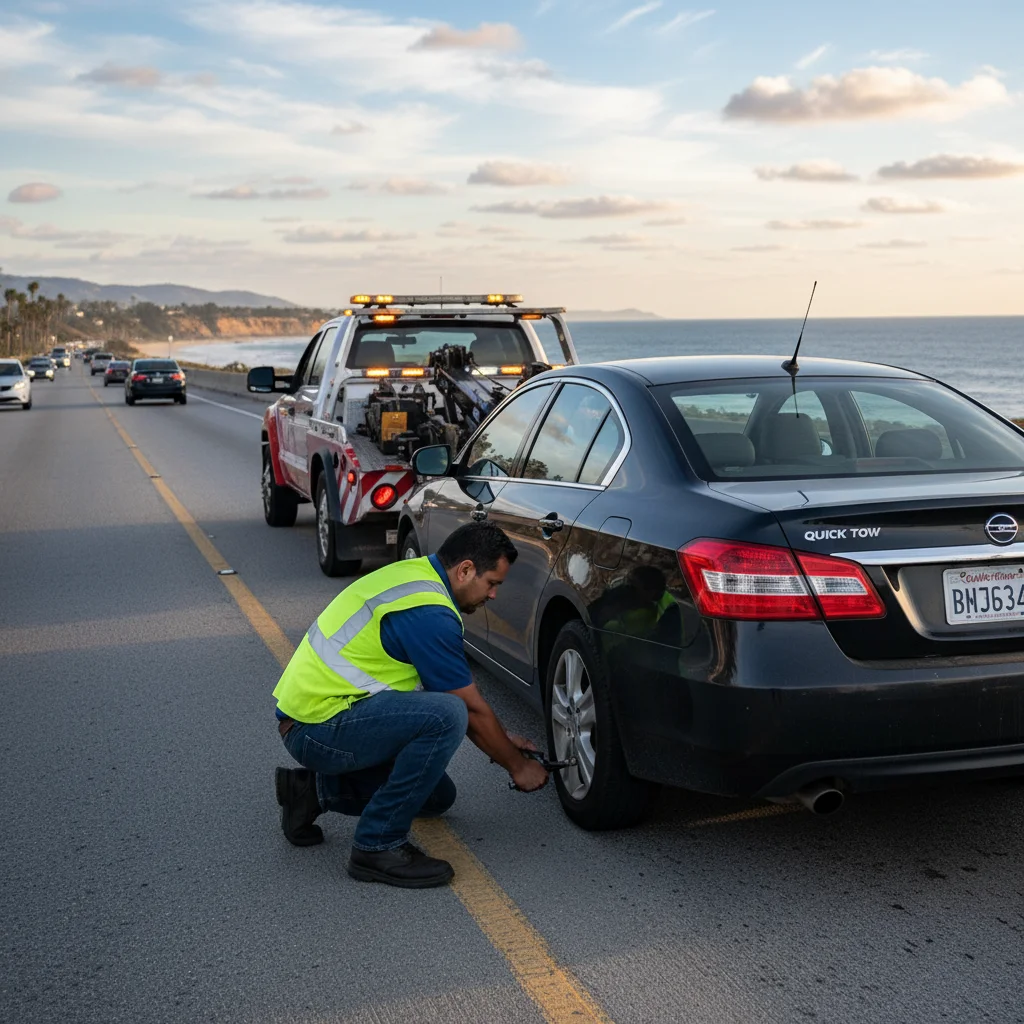
First steps when you get a flat tire on a San Diego freeway
Your immediate actions after getting a flat tire are all about safety. Whether you’re on the I-5 near La Jolla or the SR-94 heading east, the steps are the same. Panicking is a natural reaction, but a calm, methodical approach will keep you and other drivers safe.
First, don’t slam on the brakes. Grip the steering wheel firmly, ease off the accelerator, and signal your intent to move to the right shoulder. Pull over as far to the right as possible, giving yourself plenty of room away from fast-moving traffic. Once you’re stopped, turn on your emergency hazard lights immediately. This is the universal signal for a vehicle in distress.
According to safety experts like the NHTSA, it’s often safest to stay in your vehicle with your seatbelt on, especially on a busy freeway with a narrow shoulder. If you must get out, exit from the passenger side, away from traffic. Never stand between your car and the flow of traffic. A flat tire is an inconvenience, but your personal safety is the top priority. For more detailed steps on what to do during a freeway breakdown in San Diego, our other guide can help. Once you’re in a safe spot, you can assess the situation and decide whether to call for a tire change or a tow.
Can a tow truck driver just change your tire?
Yes, if the operator who accepts can do a spare swap on that pavement. Many people think a tow truck only moves a dead vehicle. Changing a flat is a normal roadside job when a usable spare is in the car.
When you call for flat tire roadside assistance in San Diego, the operator who accepts brings their own jack and impact tools. That is safer than the flimsy jack in the trunk, especially on a soft shoulder.
Tell intake you have a flat and whether you have a usable spare. The operator who accepts does the swap or quotes a tow. See roadside assistance.
Situations where a tire change isn’t possible (and you need a tow)
A spare swap is not always possible. In those cases a tow to a tire shop is the safe move.
Here are the most common reasons you’ll need a tow for a flat tire:
- You don’t have a spare tire: Many newer vehicles come with a tire sealant and inflator kit instead of a spare to save weight and space. If you’ve used the kit and it didn’t work, or if the damage is too severe, you’ll need a tow.
- The spare is damaged or flat: A spare tire that’s been sitting in your trunk for years might be underinflated, dry-rotted, or otherwise unusable. It’s always a good idea to check your spare’s condition periodically.
- The wheel is damaged: A severe pothole or curb impact can bend or crack the metal wheel itself. Putting a new tire on a damaged wheel is unsafe and often impossible.
- Stripped or locked lug nuts: Sometimes lug nuts are overtightened or become corroded, making them impossible to remove with standard roadside tools. Forcing them can break the wheel stud, creating a bigger problem.
- Two or more flat tires: Hitting a large piece of debris on the freeway can easily take out multiple tires. Since cars only carry one spare, this situation always requires a tow.
- Unsafe location: If you’re stopped on a narrow bridge, a blind curve, or an area with no shoulder, a tire change puts you and the technician at risk. Ask for emergency towing to a safer lot first.
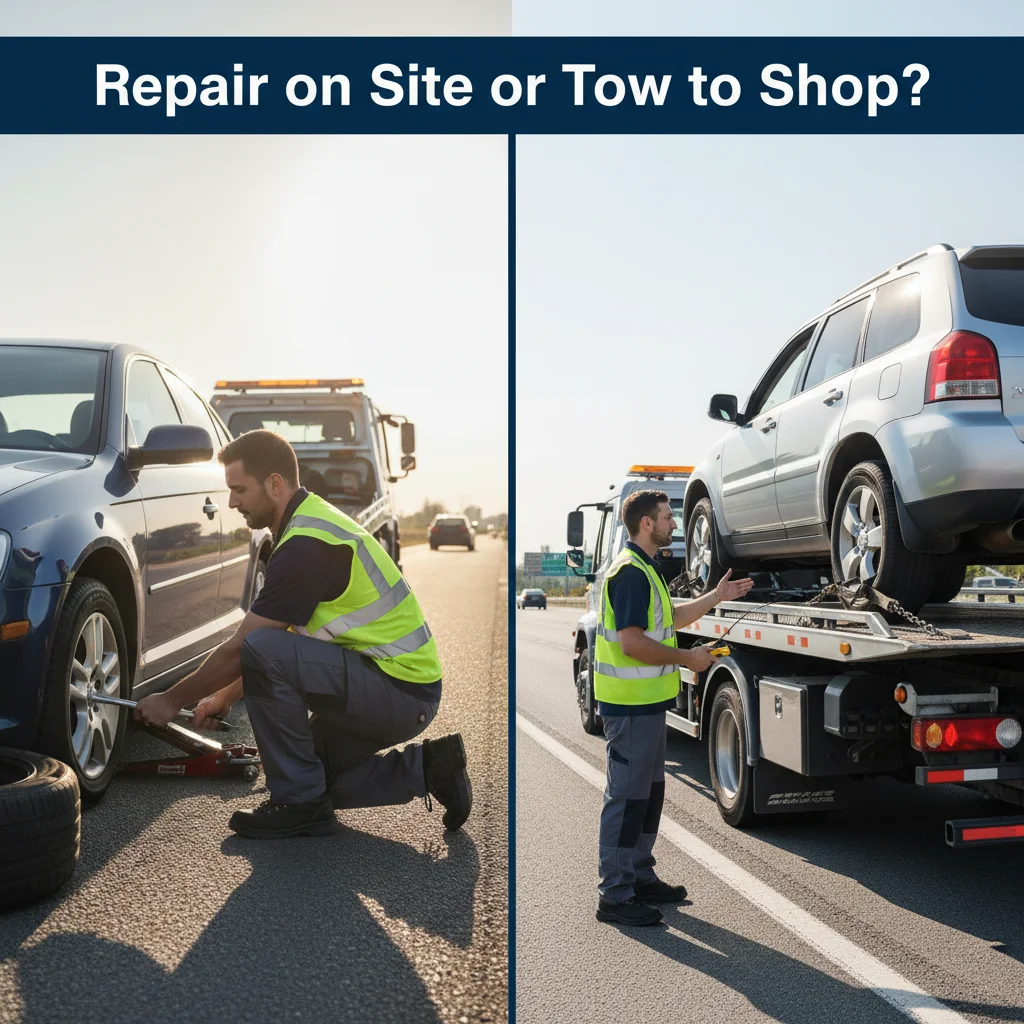
What to do if you don’t have a spare
Discovering you have a flat tire and no spare can be a sinking feeling. As mentioned, many modern cars have replaced the traditional “donut” or full-size spare with a tire mobility kit. These kits contain a can of sealant and a small air compressor. They’re designed for small punctures in the tread and are a temporary fix at best. They won’t work for a large gash, a sidewall puncture, or a full blowout.
If you find yourself in this situation, your only real option is to call for a tow for flat tire San Diego. A tow truck will safely transport your vehicle to a tire shop where you can have the damaged tire professionally repaired or, more likely, replaced. Attempting to drive on a completely flat tire, even for a short distance, can cause catastrophic damage to your wheel, suspension, and brake components, turning a hundred-dollar problem into a thousand-dollar one.
If you have no spare or the inflator kit fails, call for a tow. Tell the operator the shop in Kearny Mesa, Escondido, or another county pin you want.
The cost of roadside tire change vs. a tow to a shop
Cost is always a concern during a breakdown. The price difference between a roadside tire change and a tow depends entirely on your situation. Understanding the value of each service helps you make an informed financial decision.
A roadside tire change is typically a flat-fee service. You’re paying for the technician’s time, expertise, and the use of their professional equipment to perform a single task on-site. This is almost always the most affordable and fastest option if you have a working spare tire. You’re back on the road in minutes without any additional stops.
A tow, on the other hand, usually has a base “hook-up” fee plus a per-mile rate. The final cost will depend on how far you need to be towed. While the initial cost of a tow is higher than a tire change, it can be the more financially sound choice if a simple swap isn’t possible. Towing prevents the very expensive damage that comes from driving on a flat tire or a bent rim. Furthermore, it gets your car to a professional shop where the underlying problem can be properly diagnosed and fixed, ensuring your long-term safety. Think of it this way: a tire change solves the immediate problem, while a tow solves a more complex problem that can’t be fixed on the roadside. For a full breakdown of flat-tire service cost in San Diego, see our pricing guide.
Getting fast help for a flat tire anywhere in the county
From San Ysidro to Camp Pendleton and from La Jolla to Alpine, a flat can happen anywhere in San Diego County. Give the operator the pin: I-805, Poway backroads, or downtown.
The line takes calls 24/7 because car trouble does not stick to a 9-to-5 schedule. When you call, the nearest available licensed operator is matched to your pin. That operator gives you the arrival estimate for that spot. This brand does not publish an ETA and does not run its own fleet. Whether you need a spare swap or a tow to a shop, ask the operator who accepts what they can do on that pavement.
When to call us
If you are stuck with a flat, call (858) 923-5787. The operator quotes that pin. This line does not publish a same-day clock.